Arrange the fitting before the event
The FDA treats decorative lenses as medical devices. Do not choose them solely by color or a seller's one-size claim. Ask your eye-care professional whether lenses are suitable for you and arrange a supervised lesson. A convention morning is a poor time to discover that you cannot remove a lens confidently.
Prepare a clean space
Use a well-lit area with the supplies your clinician recommends. The CDC advises washing and fully drying your hands before handling lenses. Keep lenses away from tap water and saliva. Use the correct care system rather than substituting a liquid that happens to be nearby.
Follow the taught insertion method
Use the technique and sequence demonstrated for your prescribed lenses. Check the lens as instructed and do not insert one that is damaged or contaminated. If you have not been taught the process, book that instruction rather than relying on a costume tutorial. Practice removal during the same lesson so you are prepared to stop wearing them.
Plan a lens-free version
Carry any prescribed backup glasses and the supplies needed for your care routine. Follow the wear schedule and do not share lenses. The costume should still work if you choose not to wear them. Eye color is one detail of a character, not a reason to push through discomfort.
Know when to stop
Remove lenses and contact an eye-care professional promptly if you develop pain, redness or vision changes. Do not put them back in to finish a photoshoot. Our eye-makeup guide focuses on an external visual effect, but makeup also needs products intended for the eye area.
Arrange the prescription and fitting first
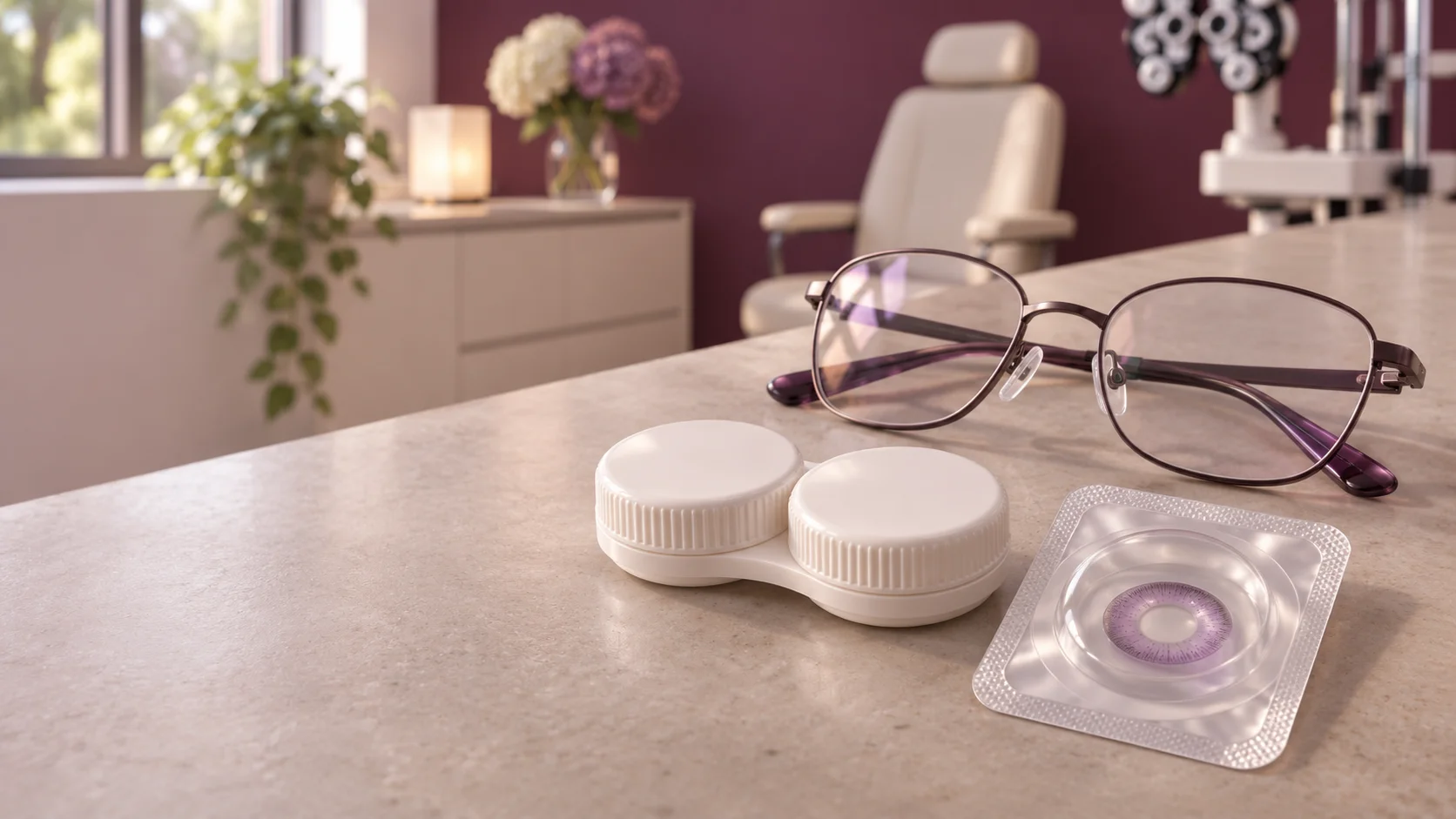
Decorative lenses are contact lenses, even when they do not correct vision. In the United States, the FDA says they require a prescription and proper fitting by an eye care professional. Do not buy a one-size-fits-all costume lens from a vendor that skips this step. Tell the clinician about the look you want and ask whether it is suitable for your eyes. Obtain the exact lens and care directions they recommend. A convention is a poor place for a first fitting or first attempt at insertion. Plan a lens-free version of the character so the costume does not depend on an eye product you have never worn.
Learn the method from your clinician
Your eye care professional should teach you how to place and remove the prescribed lens and how to recognize problems. Follow that demonstration and the lens-specific instructions rather than treating a written article as a substitute for training. Practice at home in a clean, well-lit space before the event. Make sure you can remove the lens without help. If you cannot, contact the clinician for another lesson. Do not force a lens onto the eye or keep trying when the eye becomes irritated. A costume schedule should allow you to stop without losing the rest of the look.
Keep hands and supplies clean
The CDC recommends washing hands with soap and water and drying them completely before handling lenses. Use the solution specified by your eye care provider for the lens and case; water is not a substitute. Keep the lens away from tap water, showers and swimming. Do not share lenses with another person. Follow the prescribed wear and replacement schedule, including any instructions about sleeping. A decorative design does not relax the hygiene requirements. Pack a clean case and appropriate solution if you may need to remove lenses away from home.
Inspect before applying makeup
Check the lens and packaging as instructed. Do not use a damaged or expired product. If your clinician has taught an order for lenses and eye makeup, follow it. Keep eye cosmetics clean and never share them. Avoid applying makeup while a vehicle is moving, because an applicator can injure the eye. Use products approved for the intended area and follow their labels. A dramatic anime-eye look can often be achieved with external makeup alone. The lens should be an optional, professionally fitted addition rather than the first thing you try on event morning.
Recognize a reason to stop
The FDA identifies redness, persistent eye pain and reduced vision as warning signs that require prompt assessment by a licensed eye doctor. The CDC advises removing lenses and contacting an eye care provider when discomfort occurs. Do not keep a lens in to finish photographs. Do not rinse it with water or saliva and try again. If a lens appears stuck or you cannot remove it using the method you were taught, seek professional help rather than improvising with tools. The event can continue without the lenses; eye health has priority over the costume.
Plan the event day
Check how long your clinician says the lenses may be worn and schedule the day accordingly. Bring glasses or another vision option if needed. Carry the prescribed case and solution and identify a clean place to remove lenses. Do not sleep in them unless the clinician has specifically directed that use. A late panel or long journey can extend wear beyond your plan, so set a reminder and be willing to take them out. Keep the cosplay recognizable through hair, clothing and external makeup. This avoids pressure to use a lens longer than instructed.
Use a lens-free visual alternative
Choose makeup, a wig or a small external accessory to suggest the character's eye shape or color without putting anything on the eye. Use only cosmetics intended for the area of application and test a new product as its maker advises. A carefully placed liner shape or brow style can do more for recognition than an uncomfortable lens. If you edit photographs to change eye color, label the result when showing it as an example of a physical costume. A lens-free design is a complete costume choice, not a compromise that needs an apology.
Read official eye-care guidance
The FDA explains prescription and fitting requirements for decorative lenses. Its decorative-lens page lists warning signs and buying cautions. The CDC's prevention guide covers hand hygiene, water avoidance and lens care. FDA eye-cosmetic guidance supports keeping makeup clean and not sharing it. These are general sources. Your eye care professional's fitting, insertion and removal instructions govern the lens prescribed for you.
Questions to resolve before purchase
Have you had an eye exam and a prescription for the exact decorative lenses? Has a professional shown you insertion and removal? Do you know the care solution, storage case, wear limit and signs that require removal? Will the vendor verify the prescription? If any answer is missing, postpone the lenses and use the lens-free costume plan. A claimed one-day or costume-only product still sits on the eye. A safe first experience starts with professional fitting and a realistic ability to stop when a lens does not feel right.
Keep the costume independent of the lenses
Before buying the lenses, photograph the outfit with a normal eye look. Ask which other elements already identify the character. If hair, clothing and makeup carry the design, the lenses can remain optional. This gives you an honest decision when a fitting is unavailable, the lens feels uncomfortable or the wear time ends before the event. Do not hide a problem for a final photograph. Remove the lens and seek the appropriate eye-care advice. A character can be compelling without changing eye color, while an avoidable eye injury could outlast the event by far.