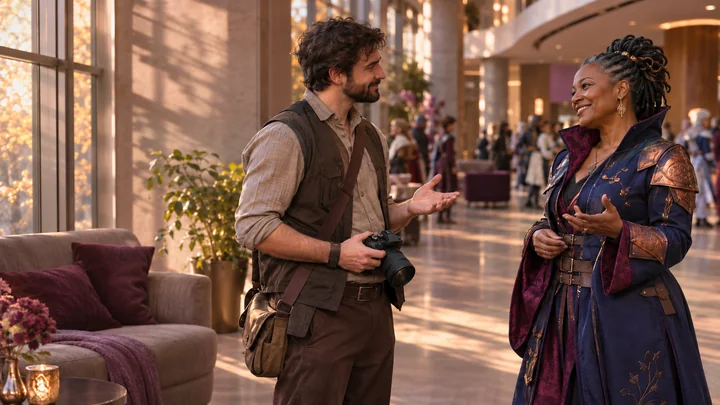
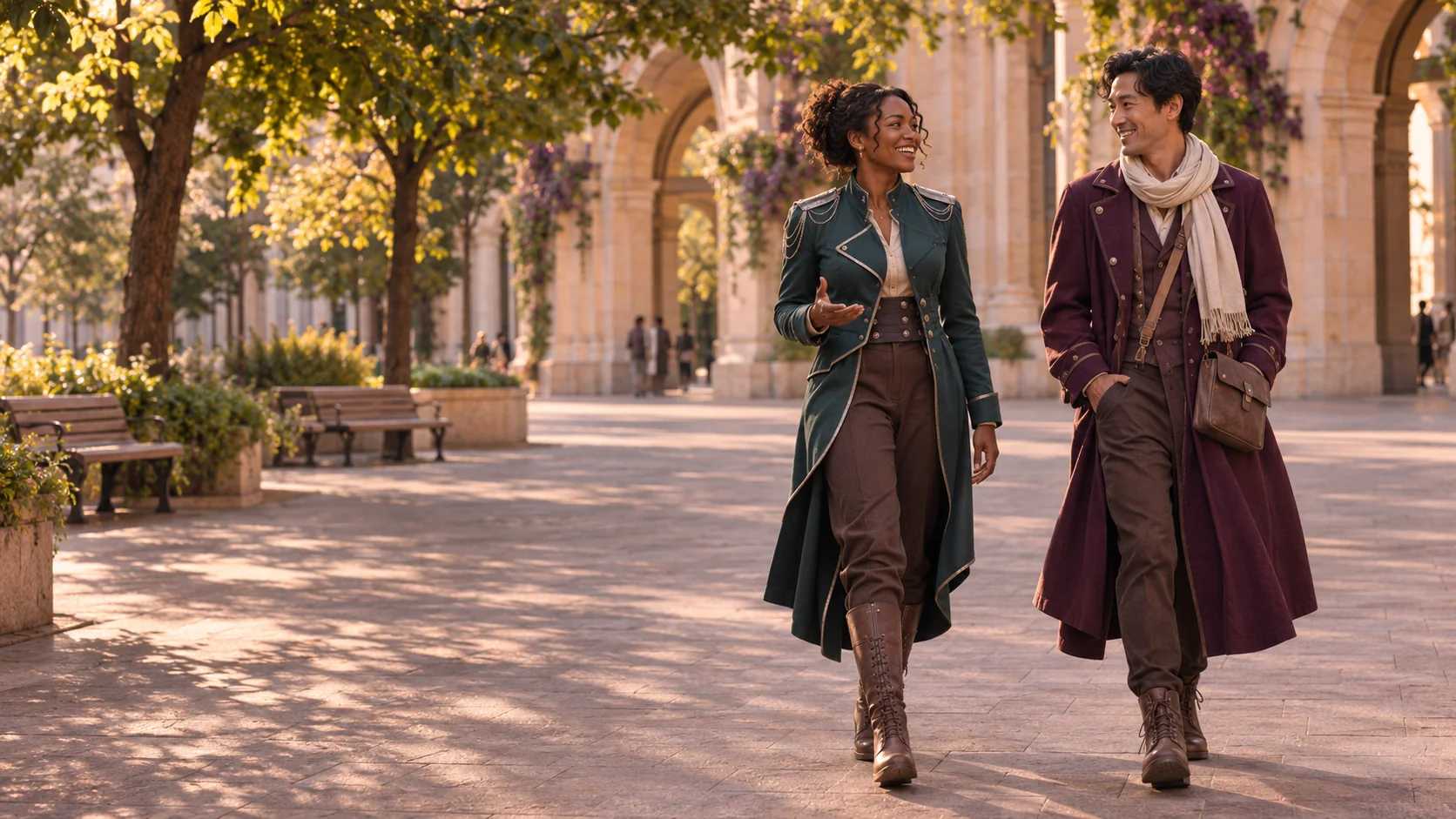
Ask what kind of place it is
A ticketed convention, shopping center, park and train station have different rules and practical constraints. A space that is open to visitors may still be privately managed. Ask the operator about costumes, masks, props and photography. Do not treat another person's social-media photo as evidence of permission.
Keep props packed between locations
A clearly fictional accessory can look different to someone who has no context. Carry props in a suitable covered container and avoid displaying weapon-like objects during travel. Follow local requirements and staff directions. The Comic-Con policy applies to its event, not the streets or transport around it.
Plan movement and visibility
Choose shoes you can walk in and keep enough vision to navigate. Remove a restrictive helmet when moving through unfamiliar spaces. Check long hems, tails and wing clearance around escalators, doors and seating. A compact version may suit a public outing better than the costume you use for a controlled photoshoot.
Make photography a separate agreement
Ask before photographing someone or including them in a posed scene. Keep paths and entrances clear. If staff ask you to move or stop, cooperate rather than debating whether the costume itself is allowed. A permission to enter a venue is not necessarily permission for a commercial photoshoot.
Have an easy exit plan
Carry a removable layer or change of clothing when practical and know where you can pack the costume away. You can end an outing early if the setting becomes unsuitable. Our consent and etiquette guide explains how to keep interactions respectful once you arrive.
Identify the place and its rules
A public street, shopping center, transit system and ticketed convention have different owners and rules. Wearing ordinary costume clothing may be straightforward, while a face covering, large accessory or realistic prop can raise separate questions. Check the rules of the specific place and the route you will travel. Do not assume that an item approved inside one event is acceptable on the journey or at another venue. If the policy is unclear, contact the organizer or property operator before going. This is practical planning guidance, not a statement that every costume is permitted in every jurisdiction.
Keep realistic props contained
If an accessory resembles a weapon, check applicable local rules and the venue's current prop policy. Transport it covered and do not display it on a train, in a queue outside the event or in unrelated public places. A foam material or bright tip does not create universal permission. At an event, follow the inspection process and keep any required tag visible. If an item is refused, have a plan to leave it off-site. A costume that works without the prop gives you a safer, more flexible option for travel and public spaces.
Plan sight, movement and size
Try the outfit at home before wearing it in a busy place. Check whether you can see steps and traffic, hear instructions and move through doors without brushing people. Remove a mask or oversized piece when it interferes with safe movement or when staff request it. Keep long fabric off the ground where it could trip you or others. Choose shoes for the distance you will walk. The fact that a design photographs well does not mean it is practical in a crowd. A smaller wearable version may be more enjoyable outside a controlled photo area.
Be considerate with photographs
Ask before photographing another person or including them in a posed scene. Choose a location that does not block an entrance, accessible path or business. A stranger may be curious about your costume without wanting to be in a video. If someone asks for your photograph, you can agree, decline or suggest another time. Do not treat a public place as an unlimited set. Check whether the location restricts professional shoots, tripods or commercial activity. A short, considerate photo session is easier to manage than an improvised group blocking a busy walkway.
Think about identification and access
A venue may ask you to show your face, ticket or identification. Make sure a mask or helmet can be removed promptly. Keep your belongings accessible without dismantling the outfit in a queue. If you need an accessible route or a place to change, consult the organizer's service information ahead of time. Plan where you can rest and store a removed accessory. These details matter as much as the costume's visual accuracy. If the plan depends on a facility you have not confirmed, choose a simpler version for the outing.
Respond calmly to attention
A costume may attract compliments, questions or unwanted comments. You can answer briefly, decline a conversation and continue. You do not owe strangers a performance or photograph. If someone touches the outfit or ignores boundaries, move to a safer area and seek staff or local help. If you are with companions, agree on a meeting point and a way to signal that you need a break. Avoid escalating a confrontation for a video. The aim is to enjoy the outing while respecting others and protecting your own comfort.
Choose the right outing
A convention, maker meetup or planned photo session may be easier for a first public costume than an unstructured trip through a crowded area. Confirm opening times, weather and transport. Pack a change of clothes or a way to remove the most conspicuous pieces if that helps you travel comfortably. Keep the outfit free of loose parts that could be lost. Afterward, note which public-space choices worked. Perhaps the costume was comfortable indoors but too warm outdoors, or a prop made the journey awkward. Use that information to plan the next appearance.
Consult official sources
Comic-Con's convention policies show how one organizer handles props and oversized costumes. New York Comic Con's FAQ gives another event's approach to props and behavior, while its cosplay page emphasizes photo consent. Accessibility information helps with routes and services at one organizer's events. These pages do not answer every local law or property rule. Use the specific authority for the place you plan to visit, and ask when a restriction is unclear.
Questions before leaving home
Can you travel without displaying a realistic prop? Can you remove a mask quickly if asked? Does the outfit fit through the doors and transport you will use? Is the intended photo area permitted and clear of walkways? Do you know where to find staff help? Have you checked weather and a route home? If the answer to a key question is no, change the plan before leaving. A prop-free, lighter or more compact version can still express the character. Public cosplay works best when the wearer and the surrounding space have both been considered.
Make a simple travel plan
Write down the route, venue entrance, prop rules and a place to remove a mask or bulky accessory. Put ticket and identification where they can be reached. If you are carrying a realistic-looking item, verify the rules that apply before traveling and keep it covered. Choose a meeting point with companions and a way to get home if the outfit becomes uncomfortable. Have a change of shoes or clothing when practical. These ordinary details let the creative part of the outing remain enjoyable. The answer to whether public cosplay is okay depends on the specific place and how the costume is used there.