
Separate a temporary effect from a treatment
A strip or tether changes the appearance by holding tissue in a different position. Removing it removes that mechanical effect. Cleveland Clinic discusses the limited effect and skin risks of face taping. Do not treat costume styling as a treatment for aging or a substitute for medical advice.
Consider a visual alternative first
Wig placement, a different brow shape or a changed camera angle may communicate the character without pulling skin. Try those reversible design choices before buying an adhesive system. Our makeup planning guide starts with one visual feature rather than changing the whole face.
Read the actual product directions
Household tape is not a substitute for a product intended for skin. Check ingredients, warnings, placement and removal instructions. A skin-use label still does not mean every person will tolerate it. Ask a clinician before use if you have a skin condition, fragile skin or a history of adhesive reactions.
Do not chase stronger tension
This guide does not provide a high-tension taping pattern. Avoid pulling the eyelids or using the hairstyle to hide an uncomfortable setup. Stop if the skin hurts, burns or becomes irritated. A more dramatic photograph is not a useful reason to keep an adhesive in place after a reaction begins.
Plan removal before application
Use the product's recommended removal method rather than pulling it off quickly. Do not reapply over irritated skin. Seek medical advice for persistent or significant symptoms. For a costume, it is reasonable to leave out the tape entirely and use the hair, clothing and pose to carry the character.
Describe the temporary effect
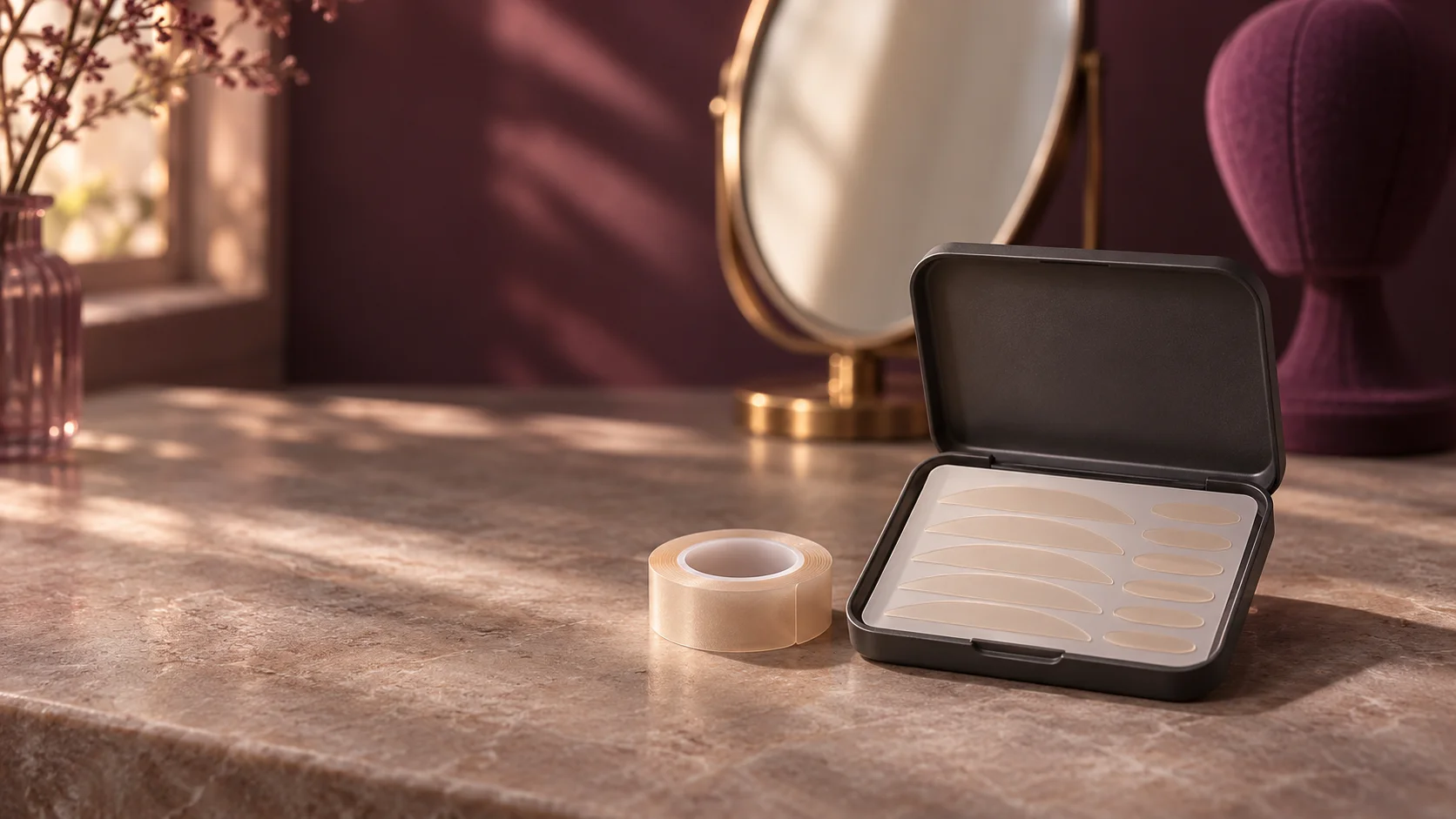
Face tape is marketed to pull the skin into a different position for a photograph or short appearance. The visible change comes from tension and placement; it is not a treatment that lifts tissue permanently. A wig or hairstyle may hide the tape or connecting band in a costume. That does not make the method comfortable or suitable for every person. Some products use adhesive on facial skin, which can irritate or injure it. Consider whether makeup, lighting, pose or a different character interpretation can create the desired look without attaching anything to the face.
Decide whether it belongs in the costume
Start with the character feature you want to suggest, such as a sharper brow or cheek line. Compare a makeup version in a photograph before buying tape. An illustrated face may be exaggerated in a way that cannot be reproduced safely on skin. If the effect requires strong pulling, placement near the eyes or constant adjustment, change the design. A temporary trick is only useful if you can wear it comfortably and remove it without harm. Do not treat discomfort as proof that the tape is working. The costume can communicate the character through hair, clothing and expression instead.
Read the specific product instructions
If you still consider a product, read its ingredients, intended placement, wear time and removal method. Do not substitute household tape, craft glue or an adhesive intended for another surface. Check for latex or other ingredients you know you react to. Follow any maker-directed test before using it for an event. Do not apply to broken, irritated or recently treated skin. A product labeled hypoallergenic is not a guarantee that you will not react. If the manufacturer does not provide clear instructions, that is a reason not to use it on the face.
Avoid excessive tension
Do not pull harder in an attempt to match a filtered image. Tension can cause discomfort and may shift as you speak or move. Keep the effect away from the eye itself and do not use a placement that changes normal blinking or vision. If the tape peels, do not repeatedly reapply adhesive over irritated skin. Remove it according to the product directions and stop when discomfort appears. A controlled photo without tape can be more reliable than a day-long application that needs constant repair. Treat the tape as optional, not a central component of the costume.
Plan removal before application
Know which remover, time and method the product maker specifies. Do not peel an adhesive off quickly because you are in a hurry after an event. Have a clean place to remove it and avoid pulling hair or lace from a wig at the same time. If the skin becomes red, blistered or painful, stop using the product and seek appropriate medical advice. Record the product and reaction if you need to discuss it with a clinician. A safe exit plan is part of the decision to apply any skin adhesive.
Use visual alternatives
A brow shape, shading and wig placement can change the apparent expression without tension on the face. Practice in the lighting and camera angle you expect. If a character has an angular illustrated face, choose one feature to emphasize rather than trying to change the whole face shape. A removable headpiece or external costume detail can provide a sharper silhouette. For a photograph, an edited effect can be used if it is described honestly when presented as a construction example. These options preserve the visual intention while reducing skin contact.
Consider the full event
A tape effect that lasts through a brief photograph may be less practical when eating, talking, sweating or wearing a wig for hours. Rehearse the complete look ahead of time if using any skin product, following the maker's instructions. Check whether the attachment catches hair or becomes visible under a headpiece. Leave room for a tape-free version if the test fails. Do not plan a first application in a convention restroom or rely on a friend to remove it without knowing the method. The best costume plan works when an optional cosmetic step is omitted.
Read clinical and regulator guidance
Cleveland Clinic's explanation of face tape describes its temporary appearance effect and potential irritation. The FDA's latex-in-cosmetics page explains why adhesives can involve allergy concerns, while its allergen guidance supports reading labels and stopping after a reaction. The FDA's general cosmetic advice covers safe use and product condition. These sources do not endorse face tape for everyone. Use product-specific instructions and professional advice if you have a skin condition or a reaction.
Questions before deciding
Is the desired effect possible with makeup or styling instead? Does the product clearly identify its ingredients, placement and removal method? Is your skin intact and comfortable? Have you tested it as directed before the event? Can you remove it without pulling the skin or wig? If any answer is no, choose the tape-free version. A temporary change in a photograph is not worth a lingering rash or injury. The character can still read clearly through silhouette, color and expression.
Keep the result in perspective
A before-and-after photograph can exaggerate the apparent effect through lighting, angle, expression and editing. Compare the same pose in the same light if you are assessing whether a product helped. Do not infer a lasting change from a short-lived visual difference. If you are using the tape only to match an illustration, ask whether the effect is visible from normal conversation distance and whether the skin stays comfortable. Stop if the answer is no. The character's clothing and styling may produce a clearer result with less effort and no adhesive tension.