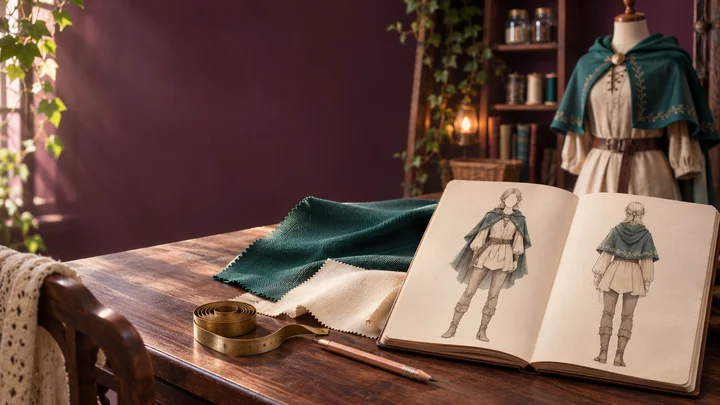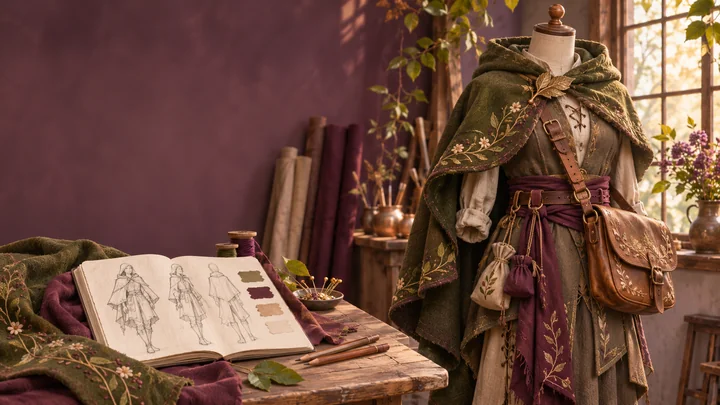
Start with clothing-led characters
A recognizable color combination can be a manageable first project. Velma's orange-and-red outfit and Kim Possible's separates provide two different directions. Check the actual product contents if you buy a set, then decide which pieces you can supply yourself.
Try a layered uniform
A jacket, shirt and distinct accessory can give you several small tasks without requiring full armor. Browse My Hero Academia guides or Attack on Titan outfits. Choose one version and check how all the layers fit together before focusing on badges or small trim.
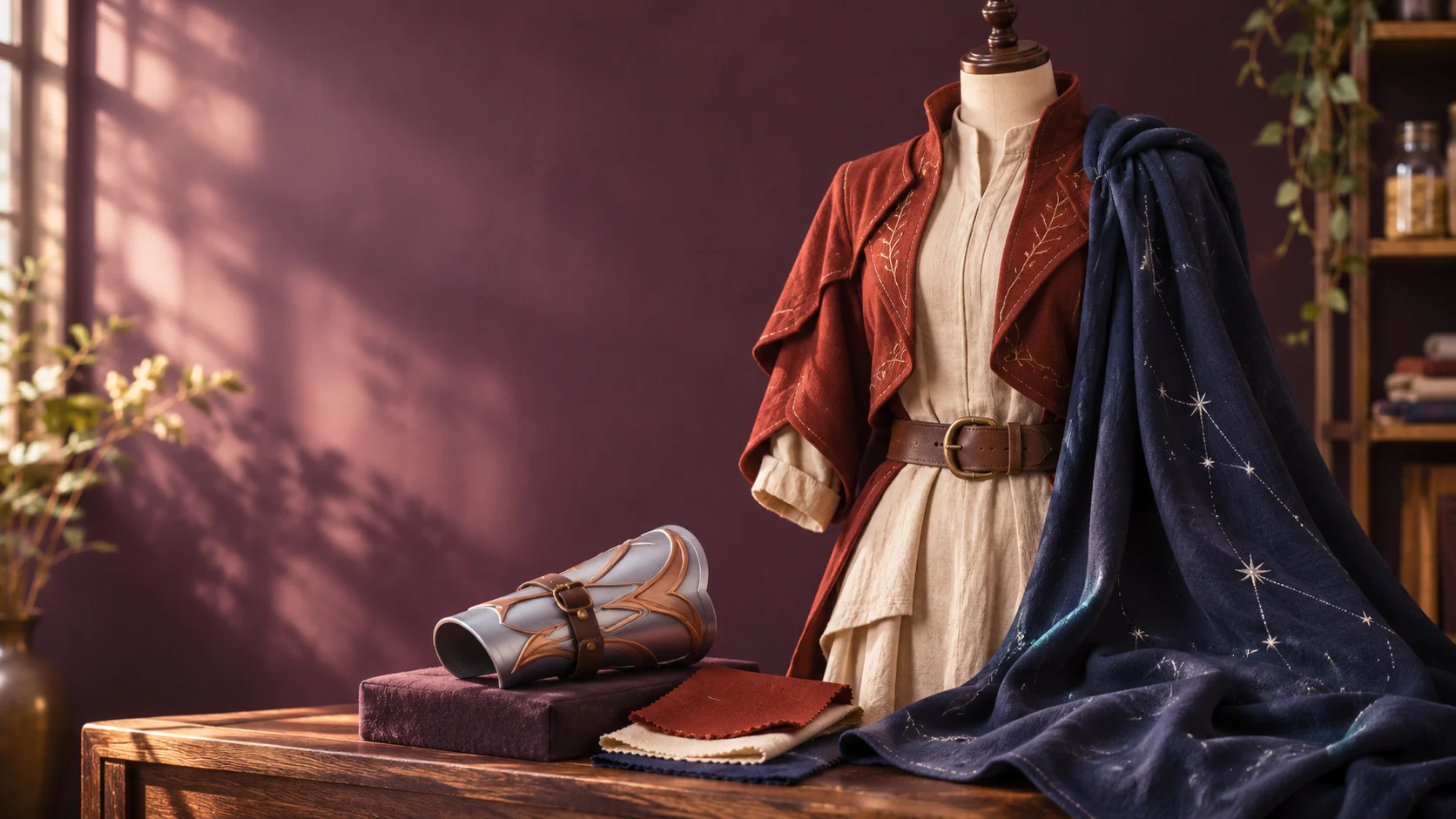
Make one decorative armor piece
If construction interests you, start with a bracer or shoulder panel rather than a whole suit. The armor starter project helps you test patterning and fastening. You can pair the sample with simple clothing for a first interpretation and build additional panels later.
Plan a coordinated group
Choose a shared series, color theme or outfit type, then let each person set their own budget and level of detail. Decide which features need to coordinate and which can vary. Do not make another person's participation depend on buying an expensive matching item. Set a deadline for the basic wearable version.
Invent an original character
An OC design lets you combine the shapes and materials you enjoy. Write a short character brief and choose a few recognizable details. Kamui's introduction to cosplay emphasizes creative participation, a useful starting point when your idea does not fit one existing character. This guide retains its historical URL without presenting an outdated annual ranking.
Choose the project type first
A list of character names is less useful than knowing what you want to make. Decide whether this project should be clothing-led, makeup-led, a small prop, a group plan or a larger craft challenge. Note your budget, deadline and venue. A character with one distinctive feature can be easier to finish than a design with many unfamiliar techniques. Choose a visual reference version and identify the parts that must be present for recognition. The historical URL of this page is a legacy label; these ideas are organized as evergreen starting points rather than claiming what was best in 2020 or today.
Try an everyday-clothing interpretation
A jacket, shirt, color palette and one recognizable accessory can produce a strong casual version of a character. Look through clothes you own before shopping. Keep the fit comfortable for the event and allow for the weather on the journey. If a key color is missing, a small scarf or patch may be enough. Photograph the outfit from a few steps away to see whether the reference reads. A clothing-led interpretation is a good first project because it leaves time to practice styling or makeup without also building a complex structure.
Build one focused accessory
Choose a small element such as ears, a badge, decorative bracer or lightweight headpiece. Sketch it against the complete outfit so its scale makes sense. Make a paper template and test how it attaches before using final material. Follow maker instructions for adhesives, coatings and tools. Check the event's prop rules if the accessory resembles a weapon or projects beyond the body. A single carefully finished detail can give the costume a clear focal point. It also teaches a skill you can reuse for a later, more ambitious version.
Use a layered uniform concept
Some character designs use repeated colors, panels or insignia rather than a complicated silhouette. Break a layered outfit into base clothing, outer layer and small identifying details. Decide which layer can be removed when the room becomes warm. Make sure pockets, closures and the ability to sit are preserved. If the reference includes rigid armor, try one decorative foam piece before building a full set. Check how the layers behave together when you move. This approach can be adapted for many genres without naming a specific character as universally best.
Plan a group with flexible roles
A group theme can create shared photographs without forcing everyone into equally demanding costumes. Agree on the story or color system, the event date and a realistic level of coordination. Let each person choose a version that fits their budget and comfort. A common small accessory can link the group even if the outfits differ. Check the venue's rules for large props and the space required for group photos. Set a meeting point and plan breaks. A good group idea still works when one member needs to simplify or change their costume.
Design an original character
An original character lets you connect costume choices to a short story of your own. Write a few lines about where the character lives, what they do and one visual motif. Draw a simple front and back reference. Choose a silhouette and two or three colors, then build a wearable first version. Keep the main idea visible even without a large prop. Test the outfit at home and update the reference sheet after wearing it. A personal design can be more achievable than recreating a complex published costume exactly, provided you keep the first build focused.
Adapt for weather and mobility
The same concept can be made in different materials or with a lighter accessory to suit the wearer and setting. A long cape may become a short shoulder piece; a heavy helmet may become a headband; a high heel may be replaced with suitable shoes. Preserve the recognizable outline or color cue while changing the practical component. Check accessibility and venue services if needed. A costume idea is useful only when you can actually enjoy wearing it. A revised design that fits your day is more successful than a perfect drawing that remains uncomfortable.
Use a simple selection worksheet
List three ideas and score each against interest, time, cost, comfort and event fit. Do not assign a false precision to the numbers; a quick comparison is enough to reveal a poor match. Choose one candidate and define the first wearable version. Set a deadline for that version before optional decoration begins. Photograph a paper or clothing mock-up. If the idea still works, buy only the missing essentials. If not, adjust the scope or choose another candidate. This process keeps inspiration connected to a project you can complete.
Check sources and venue rules
Kamui Cosplay's maker site shows how varied craft skills can support a costume. Manufacturer safety guidance matters when you try unfamiliar material systems. Comic-Con's policies illustrate prop and oversized-costume restrictions, while New York Comic Con's cosplay page covers photo consent and event resources. These are examples; check the rules of your chosen event. The strongest idea is one you can build safely, wear comfortably and explain in your own terms.
Questions that narrow the choice
Do you want to sew, style hair, paint, photograph or simply attend in a recognizable outfit? Which idea can be made wearable with the tools and time you have? Does it fit the venue and journey? Can you remove a large accessory for a break? What is the one detail that communicates the character? If an idea needs several skills you have never practiced, choose a smaller version and make one sample first. The title of a legacy list should not push you toward a dated trend. A useful idea is one that fits your goal now and leaves you eager to build it.