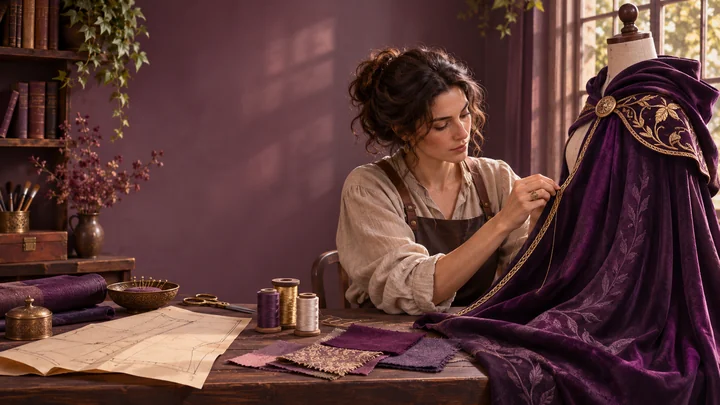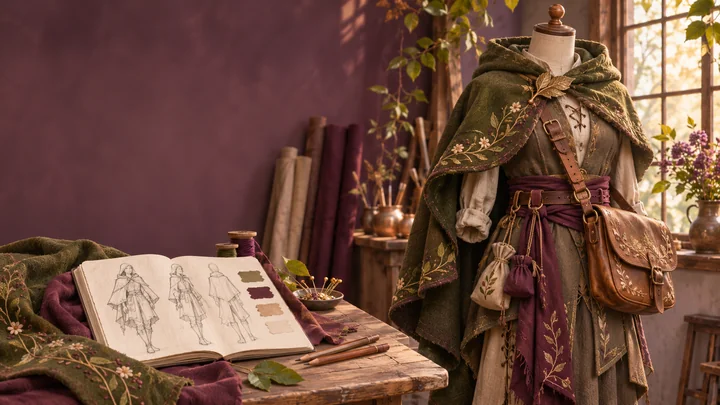

Costume design and presentation
Yaya Han's website presents costume galleries, collaborations and booking information. Look at how a finished costume is documented from more than one angle. Cowbutt Crunchies describes its work in couture cosplay, education and pop-culture design. Compare how a complex silhouette is organized rather than assuming every visible detail needs to be copied for your own project.
Instruction and repeatable patterns
Kamui Cosplay is the work of Svetlana and Benni, who publish costume-making knowledge through books, videos and tutorials. Kinpatsu Cosplay describes making costumes and props from games, anime and other media. Look for a tutorial that matches the exact skill you want to practice, then complete a small sample before attempting a whole costume.
Foam and prop-making references
Punished Props Academy publishes prop-making resources. SKS Props presents props, costumes and its foam material range. Evil Ted Smith provides another maker-led route into costume fabrication. Treat material names, tool choices and finishing steps as parts of a specific build, not interchangeable instructions for every project.
Different ways to present a character
Alyson Tabbitha's official link page leads to her portfolio and social accounts. CutiePieSensei's creator page describes cosplay and related pop-culture content. Follow the creator's own links when looking for original work. Reposted images can lose credits, context and information about collaborators.
A further source for patterns and tutorials
Pretzl Cosplay shares costume and crafting work through its own site. Before buying any creator's pattern, check the file format, included instructions, scaling information and usage terms. Choose a project that fits the tools and workspace you have. Ten names provide several starting points, but your next skill is a better filter than a follower count.
Use inspiration with credit
Save the original source beside each reference and distinguish inspiration from a reproduction of someone else's original design. Do not repost a creator's photography as your own. The character-choice worksheet helps turn a reference collection into one project. This page retains its historical URL while offering a current, unranked guide.
Use the list as a learning map
The names above are examples of different approaches, not a ranking of talent or current popularity. Decide what you want to learn before opening a profile. A finished gallery can help with silhouette and photography; a maker tutorial can help with one technique; a pattern can help with construction. These are different resources. Record the original creator page with each saved reference so you can return to the context. A dated URL should not be read as a claim that these are the ten most famous creators today. The useful outcome is finding a method you can test in your own project.
Study the full silhouette
Look at front, side and back views where the creator provides them. Notice the large shapes, proportion and how the costume changes when the wearer moves. Ask which pieces carry the character identity and which are optional detail. Use a paper sketch to translate one lesson into your own design rather than copying a finished build piece by piece. A silhouette that looks dramatic in a studio may be difficult to wear in a convention queue. Check your planned setting before adopting the same scale. The goal is to learn how design decisions work, not to match another maker's budget or resources.
Compare construction explanations
A tutorial should identify the material, tool, sequence and limits of the method. When a creator names a product, confirm its current instructions with the manufacturer. A technique demonstrated on one foam or coating may behave differently on another. Try a small sample before committing to a costume panel. Keep notes on what succeeded and what you changed. If the tutorial skips a safety step, do not assume it is unnecessary. Read the product's technical and safety information. The creator's example is valuable when you understand the conditions under which it was made.
Look at documentation, not only polish
The best photograph of a costume often hides the time, revisions and help required. Seek process photographs, pattern notes and explanations of failed attempts when the creator shares them. Notice how pieces attach and how the wearer can move. A simple backstage image may teach more than a heavily edited final portrait. Keep the distinction between a documented build and a marketing image. If you publish your own process, show the stage at which a technique was tested and name any collaborators. Useful documentation gives the next maker a starting point.
Credit the source and collaborators
When you share a reference, link to the original creator's site or account rather than an unattributed repost. Credit photographers, pattern makers and assistants where known. Ask before using another person's original character design or photograph in your own promotional material. Buying a pattern does not automatically grant the right to resell it or its instructions. Read the maker's terms. If you adapt a technique, describe what you changed. Clear attribution supports the people whose work made the learning possible and helps others find the original context.
Choose one practical lesson
After reviewing several creators, select one skill to practice: fitting a wig, making a foam seam, planning a pattern or lighting a costume photograph. Set a small project with a clear finish. For example, make one shoulder detail from a paper pattern and test its attachment. Do not try to reproduce an entire professional portfolio in one weekend. Check the tools and material instructions before starting. A focused exercise lets you compare the source method with your own result and identify where your conditions differ. That is a more useful outcome than collecting an endless folder of inspiration images.
Evaluate tutorials before purchasing
A paid pattern or class should state what is included, the skill level, file format and any materials or tools required. Look for clear examples of the finished result and a description of how sizing is handled. Read the usage terms and refund information before buying. A product offered by a creator may be useful, but popularity alone does not establish that it fits your project. Compare the cost with the time you would spend making your own pattern. Choose a resource that solves a specific problem you have already identified.
Plan for your own venue and budget
A creator's costume may be built for a studio shoot, stage contest or promotional appearance. Your event may have different prop limits, space and weather. Read the current organizer policy before scaling up a design. Set a budget for materials, tools and travel and reserve time for a wear test. An adaptation can preserve the lesson while changing size or construction. If a project requires a tool you do not own, consider a local workshop or a smaller first version. Learning from visible experts should make your own work more achievable, not more intimidating.
Keep the examples in context
The linked pages belong to their respective creators or teams and are the right place to confirm their work and current offerings. Event policies illustrate why a borrowed design still needs a venue check. Material safety guidance is relevant when a tutorial uses unfamiliar coatings or casting products. FTC disclosure guidance helps distinguish sponsored recommendations from independent process notes when a creator promotes products. None of these links supports a popularity ranking. Treat this page as a curated set of methods and official creator entry points, with the historical URL retained for existing links.