Decide whether the wig needs a cut
Start with the character reference and the wig on your head. Identify the part, fringe, side pieces and overall silhouette. A long fringe may simply be sitting too far forward because the cap is misplaced. Try clips, a different part or a modest change to the fit before removing fiber. Our wig fitting guide covers the placement checks.
Photograph the front and both sides in the costume collar or armor you will wear. A side piece that looks long on a stand can sit differently against the finished outfit. Mark the section you intend to shorten with a removable clip and note the target length. Give yourself time for more than one fitting; a single rushed cut before an event leaves no margin for correction.
Epic Cosplay's style guide database shows how different cap tops, bangs and layer lengths give a wig different styling options. Your wig's construction may already supply much of the intended shape.
Understand the cap and fiber
Look inside the cap for wefts, a skin-top area, lace and any glued or sewn attachments. Do not cut into the cap to change a hairline unless you have a procedure specific to that construction. Check whether the fibers are traditional synthetic, heat-friendly synthetic or human hair. Cutting advice for one material may not suit another.
Look for the original product record and care instructions. A purchased wig may have a fixed part and pre-layered side pieces; a custom style may hide supports or adhesive. If the wig is expensive or difficult to replace, consider a wig stylist for large changes. Trimming the ends is a different commitment from rebuilding the whole silhouette.
Arda's tutorial index separates bangs, layers, thinning and more complex transformations. Use the technique that matches the actual change rather than treating every cut as the same job.
Mark a cut line you can check later
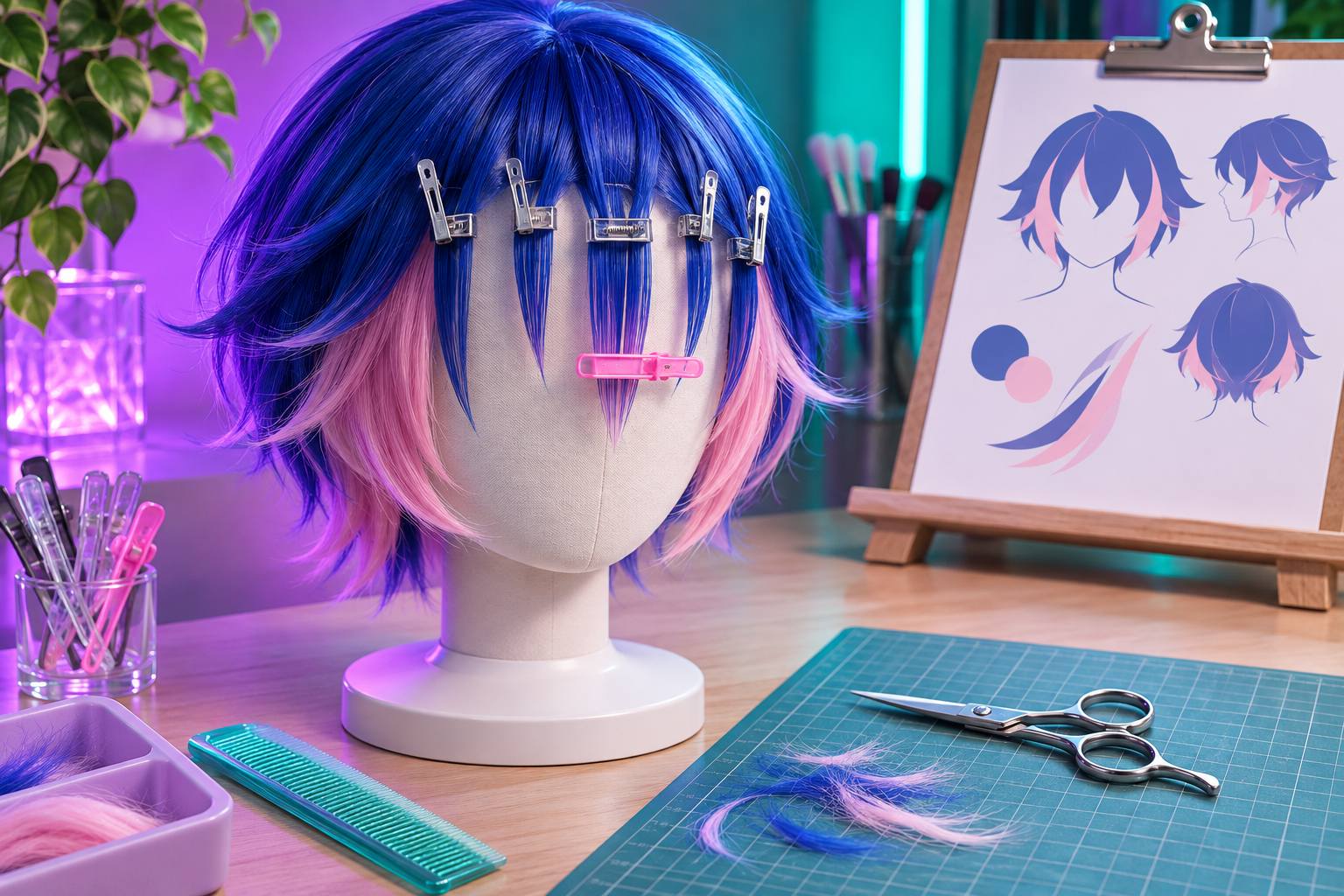
Choose one visible change for the first pass, such as lifting a fringe above the eyes or shortening a side piece. Separate that section while the wig is fitted and mark the intended level with a clip. Photograph it from straight ahead and from the side. Do not rely on a mark made only on a mannequin: its forehead and cap position may differ from the wearer's.
Leave a margin below the desired line. The fiber may shift when you remove the wig, comb it or put it back on. If the style will be curled, spiked or swept sideways, test that direction first because the final shape changes the visible length. Keep the reference image and marked photograph beside your cutting station.
Decide what will count as "done" before starting. A fringe that clears your view and preserves the character silhouette is a better stopping point than trying to equalize every isolated fiber.
Prepare a stable cutting station
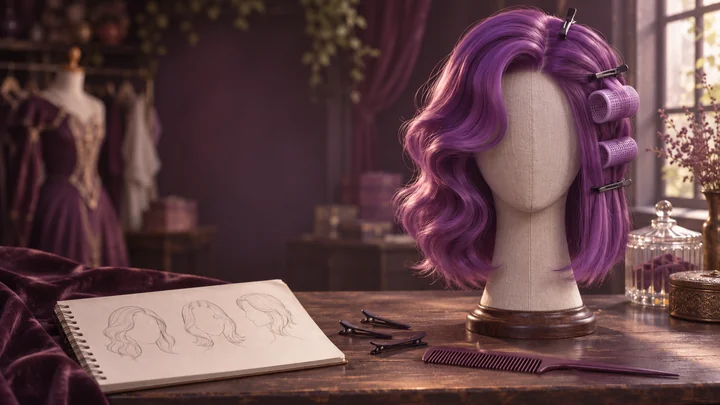
Remove the wig before working with scissors. Secure it on a suitable stand, keeping the cap in its normal shape without pulling delicate lace. Use bright light, a comb approved for the fiber, clips for uncut sections and clean, sharp hair shears. Put a tray or towel under the work area so loose synthetic fibers are easy to collect.
Section only the hair you plan to trim and clip the rest back. Use the same part and placement you established during the fitting. A stand can be smaller or shaped differently from a person's head, so the marks from the wearer matter more than the apparent length on the stand. Keep fingers clear of the blades and do not cut while the wig is being worn.
Trim the fringe in small stages
Begin longer than the final target. Take a narrow section, make a small controlled cut and stop to assess it. Repeat with neighboring sections only after the first falls as intended. Epic Cosplay's bang-cutting guide demonstrates that fringe, side bangs and other shapes require different sectioning and finishing decisions.
For a face-framing hime cut, Epic's hime-cut tutorial marks the side section on the wearer before trimming the removed wig. That is a useful example of separating the fitting decision from the cutting action. Keep a reference image at eye level so you do not remove extra length to compensate for a different viewing angle.
After a few small cuts, brush or place the fibers in their intended direction and let them settle. The fringe may appear shorter once lifted, curled or styled. Save the final adjustment for a second fitting.
Choose tools for the fiber and finish
Sharp shears give a straightforward way to make small controlled changes. Do not assume a razor is suitable for every synthetic fiber. Jon Renau's synthetic care and styling guide recommends dense steel shears for its fibers and warns that a razor can fray their ends. Epic Cosplay publishes a razor tutorial for its own wigs. The difference is a reminder to follow guidance for the wig in front of you.
If you do not know the fiber or cannot control the tool, use the simpler shears approach or seek a stylist. Dull blades can pull fibers before cutting them. Keep the comb, fingers and cut line visible, and never make a blind cut behind the cap.
Do not use heat to hide an uneven trim unless the maker confirms that the wig supports the method. Shape and length should be checked before any hot styling decision.
Recheck the shape on the wearer
Put the wig back on with the same cap adjustment and under-wig hair arrangement. Assess it from the front, side and in a photograph taken at the distance others will see it. Look for the overall character shape before chasing a few uneven fibers. Compare both sides, but remember that the reference hairstyle may be deliberately asymmetrical.
Move your head and check whether the fringe falls into your eyes. Refit the costume collar and any headpiece. A section that works alone may catch under an accessory. If a strand is still too long, mark it, remove the wig and trim a little more. Do not bring scissors close to your face for a quick correction.
Use the styling guide for reversible shaping after the cut. A clip or compatible product may produce the line you want without removing more fiber.
Handle layers, curls and lace conservatively
A layered or curly wig can spring upward after a cut. Work with the fibers in their intended finished position and remove less than the visible difference suggests. Avoid combing a set curl straight simply to create an even cut line. That can change the style you are trying to preserve.
Lace fronts and hand-tied areas deserve extra care. Do not snip near the knots or cut a section that may be attached to the lace without understanding how it is built. If you need to alter the hairline, density or a large part of the cap, get a tutorial for that construction or use an experienced wig stylist.
Epic Cosplay's FAQ confirms that its wigs can be cut and customized, but that does not mean every alteration is easy to reverse. A conservative first session protects options for later refinements.
Clean up and store the finished wig
Collect the loose fibers from the table and check that no short ends remain caught in the cap or clothing. Gently return the fibers to their intended direction using a tool approved for the wig. Photograph the finished placement and record what you removed. That reference helps if the piece is washed, restyled or shared.
Store the wig without crushing the new fringe or layers. If a styled section needs support, follow the maker's storage method. Keep the wig away from heat and direct sunlight as its care instructions require. A cut wig may still need regular gentle maintenance; our detangling guide explains how to work through small knots without pulling on the cap.
If the result is not quite right, pause before another cutting session. Refit, restyle and photograph it again. Taking away more fiber is always possible later; adding the cut length back is not.
Questions about cutting a cosplay wig
Should I cut the wig while wearing it?
Mark the target length on the wearer, then remove the wig and cut it on a stable stand. Refit between stages. Keep scissors away from your face.
How much should I cut first?
Less than the apparent difference. Take a small amount from one narrow section and check how the fiber falls before continuing.
Are razors safe for synthetic wigs?
Maker guidance differs. Some brands demonstrate a razor method, while others warn it can fray their fibers. Follow the instructions for your exact wig and use sharp shears when unsure.
Can styling repair a cut that is too short?
A clip or new part may change the appearance, but it cannot restore removed fiber. A replacement piece or professional help may be needed for a major mistake.