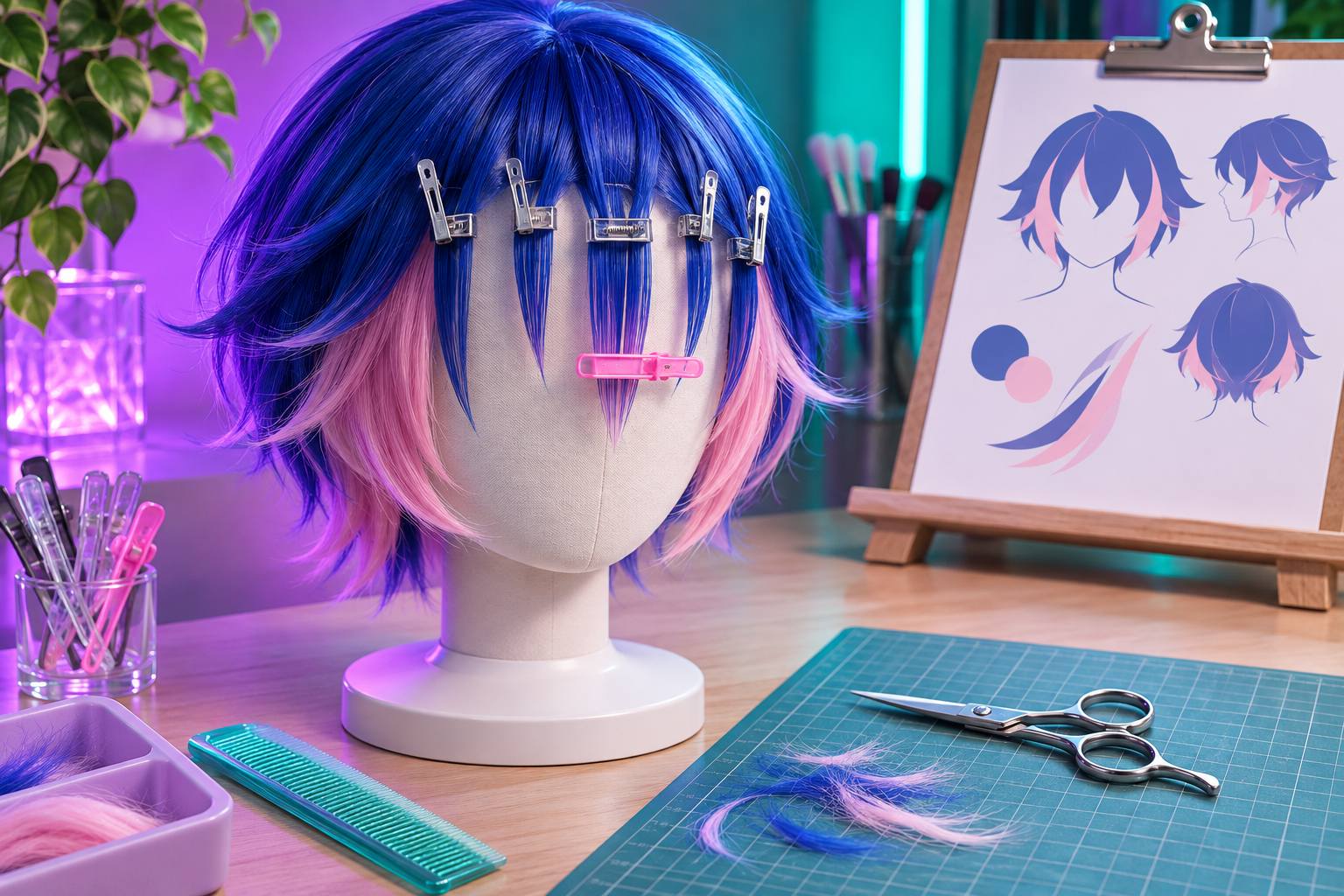

Read the wig as a structure
Look inside the cap and identify the existing part and direction of the fibers. A style with a fixed part may not expose the roots neatly when reversed. Photograph the original shape and mark the changes you need. Separate essential silhouette changes from tiny details that will disappear in a full-length photo.
Work on a stable stand
Secure the cap to a suitable stand without damaging lace or mesh. Section the hair so the area you are styling is separate from the rest. Detangle gently before shaping. Keep a reference image at the same angle as the section you are working on instead of repeatedly turning the whole wig.
Start with reversible shaping
Try clips, rollers or a small amount of a fiber-compatible styling product before cutting. Test the product on a hidden section and let it dry as directed. Several thin adjustments are easier to evaluate than a saturated clump. Preserve access to the cap adjustments so the finished style still fits.
Use heat only with a verified limit
An unknown synthetic wig should not be treated as heat-safe. Arda publishes guidance for its own fibers, but that limit does not apply to another brand. Follow the exact wig's instructions and test a hidden area. Skip hot tools when you cannot establish a suitable setting.
Fit before the final cut
Place the styled wig on your head and check the fringe with your eyes open and the costume collar in place. Mark only the amount that truly needs shortening. Our cutting guide explains a conservative trimming process. Store the finished shape without crushing the sections you built.
Identify the fiber and cap
Read the wig's label and maker page before choosing tools. A synthetic fiber, heat-resistant synthetic fiber and human-hair wig can require different treatment. Even within one category, the manufacturer's specific heat limit and care advice take priority. Inspect the cap, part and any lace front. Decide what part of the character's look depends on styling and what already exists in the wig. Do not start with cutting or high heat. A quick photograph of the wig as received gives you a reference if you later need to undo or explain a change.
Secure it on a suitable stand
Place the wig on a stand or head form that supports its cap without stretching it. Fasten it only through areas the maker allows; pins through a lace front or delicate cap can damage the construction. Set the stand at a comfortable working height and keep tools organized. If a head form is smaller than your own head, check the final shape on the wearer before cutting. A style that looks balanced on a stand may fall differently once the cap is stretched to its actual fit. Use the stand for controlled work, not as the final fit test.
Detangle before shaping
Separate the hair into manageable sections. Work from the ends upward with a tool suitable for the fiber, supporting the strand near the cap to avoid pulling at the stitching. Do not force a comb through a knot. For a long wig, keep sections clipped out of the way and check the nape, which can tangle against costume collars. If a product is needed, use one recommended for that wig type and test a small area. Detangling first lets you see the true length and volume before changing the style. It also makes later work more predictable.
Build the silhouette with reversible steps
Part the wig, arrange layers and use temporary clips before making a cut. Photograph the result from front, side and back. Compare it with the character reference at a similar angle. Change one feature at a time so you can see its effect. A strong silhouette and clear fringe often matter more than tiny strands. If you are styling a spike or curl, test a small section with the maker-approved method. Let products dry or set as directed. Stop when the style reads clearly instead of adding more spray or structure merely because a tutorial used it.
Treat heat as a separate decision
Never assume a synthetic wig tolerates a curling iron or straightener. Check the maker's stated heat limit and tool instructions, including whether the temperature control is reliable. Test a hidden strand before styling a visible section. Keep heat away from the cap, lace and skin. Work in an appropriate area and let fibers cool before handling. If the wig has no verified heat guidance, use non-heat techniques or choose another product. A melted or distorted section cannot be fixed by adding more heat. The goal is to preserve a wearable costume piece.
Cut only after fitting
Put the wig on with the actual hair base and costume collar before trimming a fringe or length. Mark the intended change and remove only a little at a time. A stand can help with controlled cutting, but final checks belong on the wearer because the cap position affects where the hair falls. Use clean tools suited to synthetic fibers and keep cut strands contained. If you are unsure, consult an experienced wig stylist. Avoid cutting through lace, cap fabric or the natural hair underneath. A reversible styling step is preferable when the same wig may serve another character later.
Test the event-day style
Wear the completed wig for a rehearsal with the full costume. Turn, sit and use any headpiece. Check whether the style blocks vision, rubs the face or catches on an accessory. Plan how to transport it without crushing the shape and what small corrections you can make on site. Avoid carrying a hot tool or a chemical product unless the venue permits it and you can use it safely. After the event, remove pins, clean or detangle according to the maker's guidance and store the wig so its shape is supported.
Use maker guidance for the method
Arda Wigs' FAQ provides product-specific fiber and care information for its styles. Jon Renau's synthetic wig guide discusses construction and care, while its care notes explain why ordinary hair products and rough treatment may not suit wigs. Fitting guidance is relevant before any irreversible cut. These makers do not set a universal temperature for every wig. Use the exact product instructions and a small test before changing the visible style.
Questions before making a change
Can the same result be achieved with a part, clip or temporary product? Have you checked the fiber and cap instructions? Is the wig fitted on the actual wearer before cutting? Can the style survive transport and the event schedule? If you are using heat, do you have a verified limit and a hidden test strand? If one answer is missing, pause. A careful styling sequence protects the wig and leaves room for another attempt. The finished result should work from several viewing angles and remain comfortable with the whole costume, not just look right on a stand. Keep a photograph of the style before and after the session, along with the tools and products used. If the result fails after travel, these notes help identify whether the issue was the construction, transport or wear. A planned method for packing is part of the styling process. Test it before an important event, not on the morning of travel.